
Description
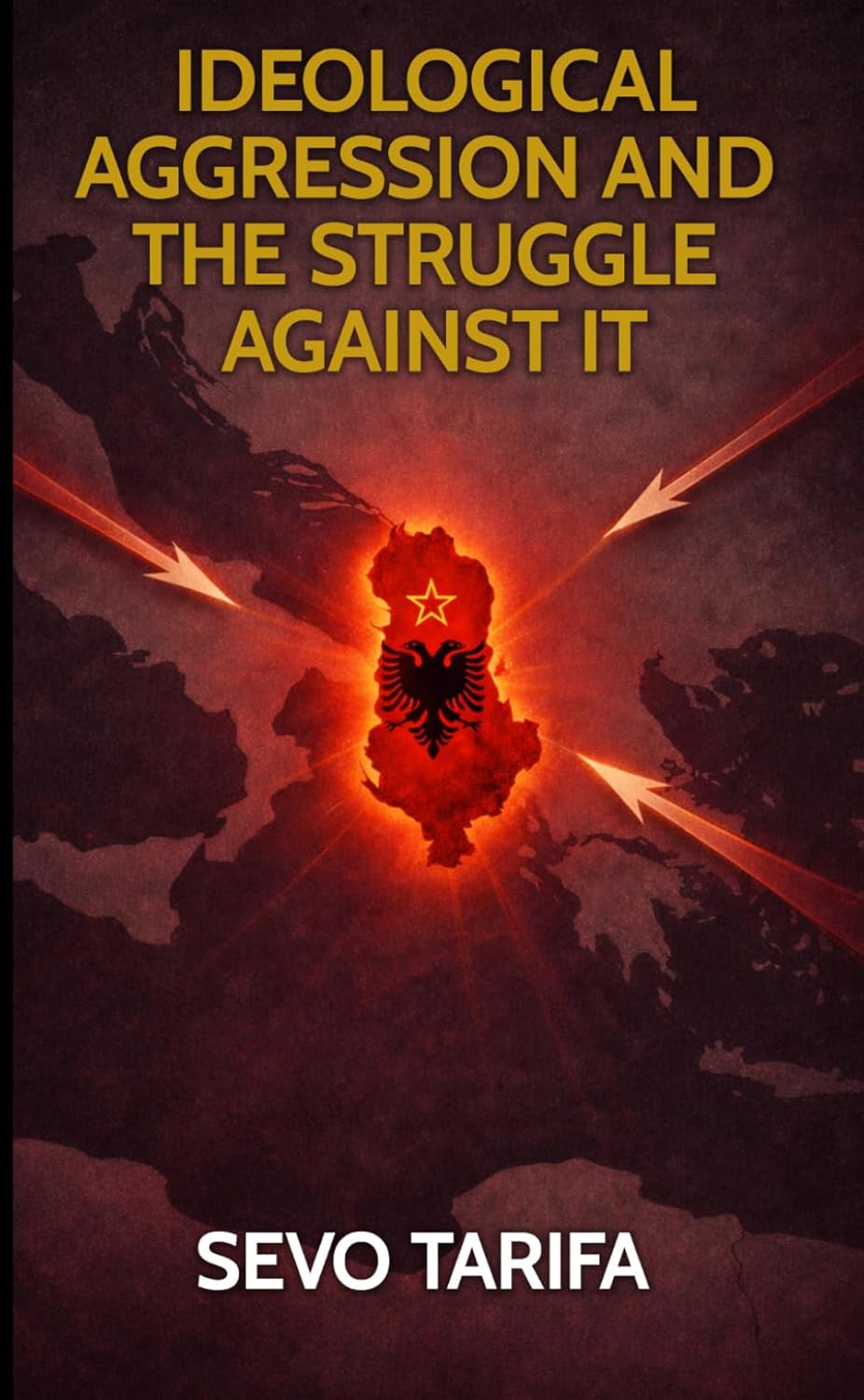
Sevo Tarifa’s Ideological Aggression and the Struggle Against It is a view into the world outlook of the Albanian party and state, circa 1979. It begins with the basic Marxist-Leninist postulate that global forces are divided into two — proletarian and bourgeois — and that ideological struggle takes place on that basis. In particular, it focuses on the imperialist tactics of so-called “psychological warfare” — the use of information, sometimes overt and other times covert, to influence and sway populations into taking one position or the other. The book takes the reader through the author’s view on the history of imperialist ideological aggression against Albania, the forms it takes, and the means to combat such influence.
Perhaps most interesting is what Tarifa calls “poison-bearing channels,” the title of the chapter in which he gives the Albanian perspective on the “bourgeois press” and its worldwide influence, as well as its aims. Tackling violence, pornography, prostitution and other media, he argues that the capitalists aim to corrupt youth in particular, politically and morally, through various means of “degenerate” culture, so as to lull them to sleep and make them forget the class struggle as the driving force of society. Parallel to this cultural struggle, according to Tarifa, is the secret work of the superpowers’ intelligence agencies to carry out underground operations for domestic and foreign subversion.
In this international atmosphere, Tarifa presents the People’s Socialist Republic of Albania as a steel pillar, a granite rock, never to be caught unawares in battle with the capitalist world. In this view, any nation that aims for true independence must first and foremost pursue the greatest possible self-sufficiency, in conjunction with ideological preparation of the population. The slogan given for this mentality is “the defence of the Homeland is the duty above all duties.” After all, Tarifa writes, “a country is invincible when it is strong politically, ideologically, economically and militarily.”
As today’s world copes with numerous external pressures, it may be instructive to consider how a small independent country once approached not-so-distant problems.